
Eco-friendly architecture is no longer just a beautiful concept; it is moving toward real solutions. Researchers are now seriously rethinking the foundational materials that have supported our entire infrastructure for centuries. Concrete and plastic, which are familiar but incredibly toxic to nature, are gradually giving way to organic materials. And this is where mycelium emerges as the major breakthrough. The vegetative part of fungi has proven to be an ideal foundation for creating reliable, affordable, and safe technologies for the future.
Living mycelium bricks and the ambitious MYCO-BUILD project
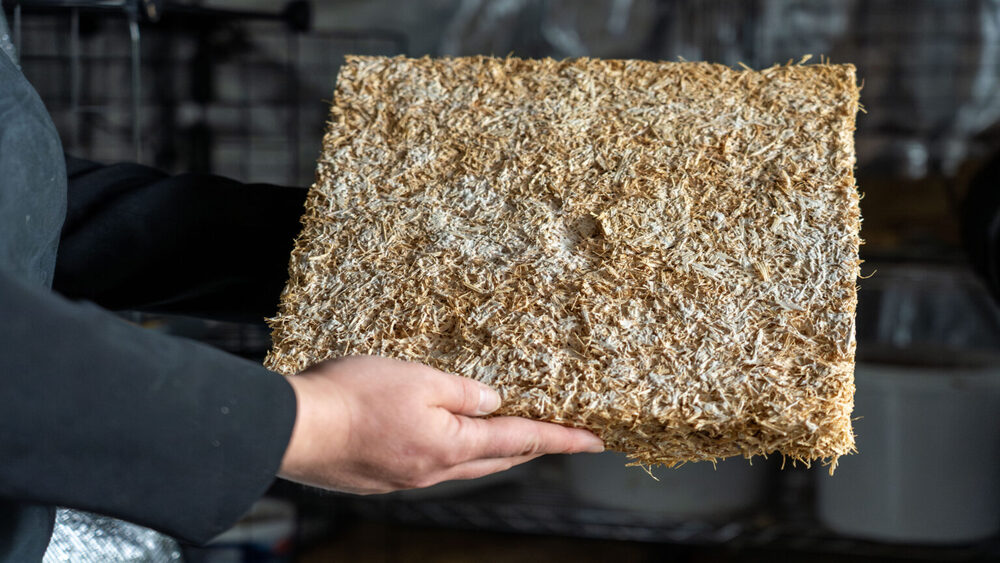
Launched in early 2026, the MYCO-BUILD project completely overturned engineers’ assumptions about the strength of organic materials. Scientists are creating actual living bricks, literally growing building blocks out of mycelium. The technology is brilliant in its simplicity: mycelium is mixed with agricultural waste, after which it grows rapidly and tightly binds the particles into a monolithic structure. Then the finished material is baked, completely stopping the fungus from growing.
The result is remarkably lightweight blocks that can still withstand immense loads. The main value of these bricks lies in their absolute eco-friendliness. Once a building or structure reaches the end of its lifespan, the materials will simply decompose in the soil. They will not leave behind mountains of non-recyclable construction waste and will instead become a natural fertilizer for the earth.
Mushroom leather and eco-friendly packaging are changing the fashion industry
The mushroom revolution is impacting not just construction, but a massive consumer sector as well. Major global brands are now moving away from synthetics en masse and switching to mushroom-based eco-leather. In terms of texture, elasticity, and durability, it is entirely on par with animal leather, yet its production requires significantly less water and fewer resources. Importantly, the process avoids toxic tanning: it is exactly this chemical procedure that has harmed the environment and the health of factory workers for decades.
In parallel with the fashion industry, transport logistics is also changing: heavy styrofoam is being rapidly replaced by mushroom packaging. It perfectly absorbs shocks during the transportation of fragile electronics or furniture, and after unpacking, it can simply be tossed into a compost bin or buried in the woods. Nature has already designed elegant and incredibly effective mechanisms for us, and all that remains is to thoughtfully integrate them into our daily lives.