
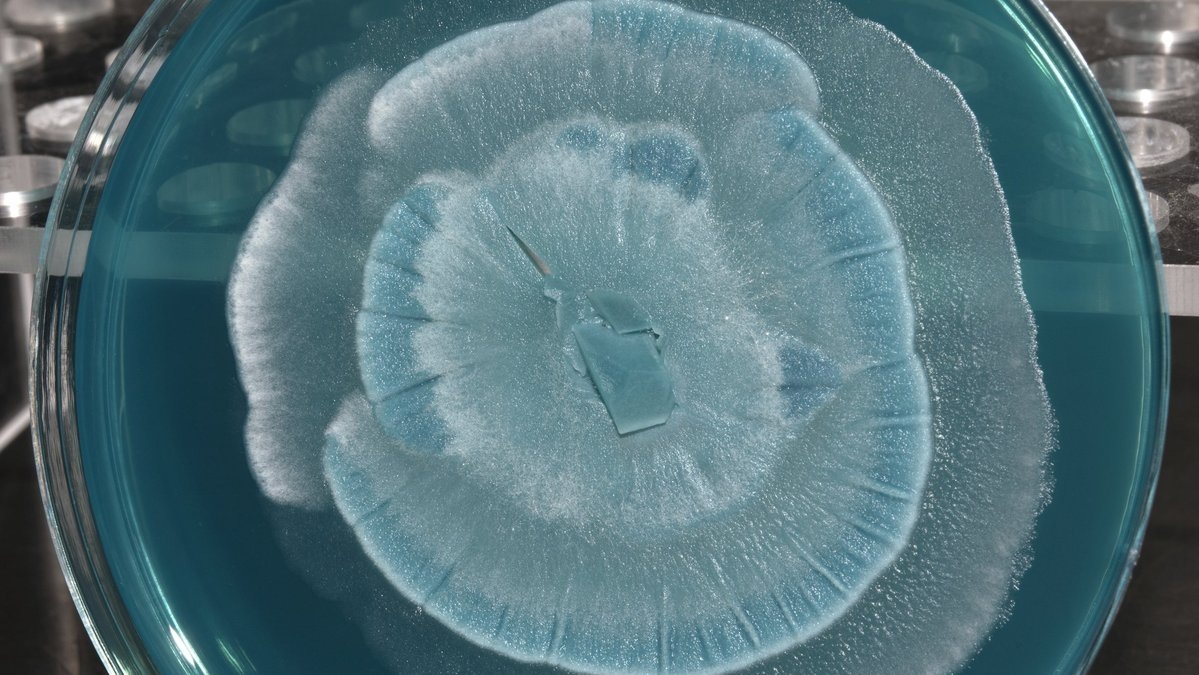
A research team from Virginia Tech and Boise State University has made a discovery that could transform cryopreservation, food production, and even weather management. Unique proteins found in common soil fungi are capable of turning water into ice almost instantly, even at temperatures significantly higher than the typical freezing point.
The Mechanism of the “Ice Touch”
The process of turning water into ice is more than just a drop in temperature; it is a complex phase transition requiring nucleation centers. In a pure environment, water can remain liquid even at -40°C. For ice crystals to grow, microparticles are needed around which the ice lattice can form.
Scientists found that fungi of the Mortierellaceae family produce special proteins — biological nucleators. They mimic the structure of ice, forcing water molecules to align in the necessary order. Thanks to this, freezing begins as early as -2°C.
Evolutionary Theft: A Gift from Bacteria
The most surprising discovery was the way these fungi acquired this superpower. Genetic analysis showed that hundreds of thousands, or perhaps millions of years ago, the ancestors of these fungi “borrowed” the corresponding gene from bacteria.
This process, called horizontal gene transfer, is extremely rare between bacteria and fungi. However, in this case, it proved to be incredibly successful: the fungi not only kept the gene but also modified it, making the protein more efficient and easier to isolate.
Why This Matters for Industry
Science was previously aware of similar proteins in bacteria, but their industrial use is limited. Bacterial proteins are firmly embedded in cell membranes, making their purification expensive and difficult. Fungal proteins are water-soluble and not cell-bound. This opens up huge prospects:
- Eco-friendly weather management. Silver iodide is currently used to trigger precipitation or create artificial snow. It is toxic and only works at -5°C. Fungal proteins are safe for nature and work at higher temperatures.
- Ideal food freezing. In the food industry, these proteins will help control the size of ice crystals. This will avoid damaging the texture of meat, vegetables, or ice cream, preserving their taste and quality after defrosting.
- A medical breakthrough. In cryopreservation (freezing cells, tissues, or embryos), the main problem is the damage to cell membranes by sharp ice crystals. Soluble fungal proteins make the freezing process smoother and safer for biological material.
New Horizons in Climatology
In addition to practical applications, the discovery forces a revision of existing climate models. Previously, the role of biological factors in cloud and precipitation formation was underestimated. Now scientists believe that fungal spores and their metabolic products in the atmosphere could play a key role in how and where rain falls.
The study, published in the journal Science Advances, emphasizes that nature has already created tools that we are only just learning to replicate in laboratories. In the near future, “fungal technologies” could become the basis for creating environmentally friendly cooling systems and protecting crops from frost.